

Japanese Onsen Etiquette Part 1: Rinsing & Showers
Japanese Onsen Etiquette Part 1: Rinsing & Showers2026.4.5
I hold certifications as a “1-Star Onsen Sommelier”—a recognized Japanese private qualification for hot spring experts—and a “Regional Revitalization Master.” These credentials have been incredibly useful in my primary professional work, especially when collaborating with hot spring facilities, hotels, and traditional Japanese inns (ryokan).
However, for the past three months, I’ve also been working a side job at an actual onsen facility, and that experience has been eye-opening in a whole different way.
To put it bluntly, it’s a bit of a “what is wrong with people these days?” kind of situation. While the lack of manners among younger guests is a concern (perhaps just due to the sheer number of them), I see plenty of older men whose behavior is just as appalling.
(By the way, to spare anyone the awkwardness of wondering if I’ve seen them in the buff, I’ll keep the specific location of where I work a secret!)
Back then—around the 1990s during Japan’s “Bubble Economy”—it was quite common for parents to take their kids to the local “sento” (neighborhood public baths). On special occasions, we’d go a bit further to a “super sento”.
Back in those flashy bubble days, these were like massive bath-themed amusement parks, sometimes even featuring water slides and heated pools!
Because of those childhood trips, my parents taught me the “proper way” to use public baths, which is quite different from how you bathe at home.
Most young Japanese people today have grown up with a nice bath at home as a standard, but it feels like many of them missed out on those “public bath 101” lessons from their parents. Honestly, as a guy from the older generation, it’s a bit of a shock to see.
I often see international tourists who have clearly done their homework and actually have better manners than some of the local Japanese youth!
It’s not just the kids, though. I see parents—some around my age or even older—with terrible manners, too. If the parents never learned the rules themselves, they can’t pass them down to the next generation, and the cycle just keeps going.
While the specific rules can vary slightly depending on the facility, there are some fundamental “golden rules” of Onsen etiquette that everyone should know.
My goal isn’t to lecture you—I just want everyone to understand the basics so they can truly relax and enjoy the magic of a Japanese hot spring!
The Golden Rule: Rinse and Clean Before You Soak
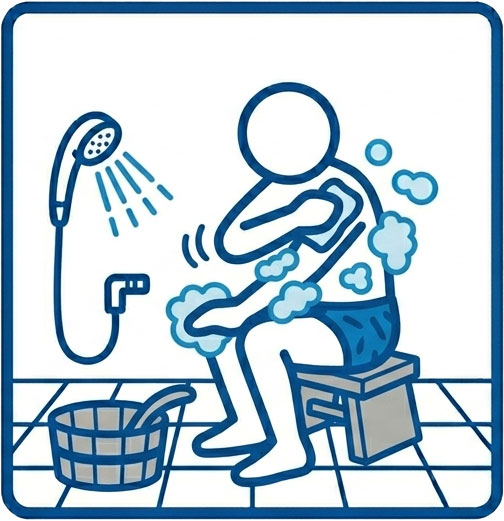
In Japan, you might be used to soaking in a hot bath at home first and then washing your body afterward. However, at a public bath or onsen, that is a big “no-no.” The golden rule is to always rinse or clean your body before stepping into the communal tub.
That said, it doesn’t always mean you have to scrub yourself from head to toe with soap before getting in. Depending on the facility—especially at outdoor-only baths—the recommended way to enter can vary.
For some types of spring water, keeping a layer of natural skin oils/keratin can actually help prevent dizziness or “bath-flush” (nobose) from the strong minerals. If you’re visiting a potent hot spring, it’s a great idea to ask the staff for their recommended way to bathe. Every onsen team knows their water best, and you can often find these tips on their official website too.
*Note: Please keep in mind that while large hotels often have English-speaking staff, many local or smaller Onsen facilities in Japan may only speak Japanese. It’s always a good idea to check in advance if there is someone who can assist in English.
Whether you scrub with soap or not, the first thing you must do is rinse off the surface dirt from your body with a shower or kakeyu (pre-bath splash). In most cases, just rinsing with hot water is enough to get clean before you soak. And remember, the same rule applies to the sauna.
You might feel fine, but everyone around you is probably thinking, “Ugh…”
Imagine this: You’re in the tub, and someone with literal shit on their ass walks in and sits right next to you without even rinsing off. How would you feel? Exactly. That’s how it feels to others when you skip the rinse.
Of course, there are exceptions. If you’re at an outdoor-only onsen in the middle of winter, it’s often too freezing to wash your whole body before getting in! In those cases, it’s perfectly fine to just use plenty of hot kakeyu (pre-bath splashes) to rinse off any surface dirt, soak in the tub to warm up first, and then wash your body later.
Some onsen areas that only have outdoor baths even recommend this way of bathing. The key is to at least rinse yourself well so you’re not bringing dirt into the communal water.
When you do your kakeyu, be mindful of the people around you. Make sure the water doesn’t splash onto those already soaking in the tub.
You’ll often see people tossing buckets of water everywhere with a loud “SPLASH!” without a care, or letting it spray from a high position right next to someone trying to relax in the bath. Don’t be that person.
A little consideration goes a long way—try to keep your splashes low and controlled so you don’t disturb anyone else’s peaceful soak.
The “Kakeyu” Ritual — Rinse Before You Soak
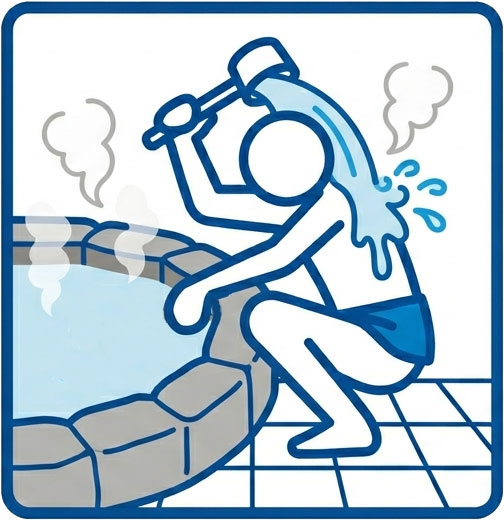
To be honest, there’s a “nightmare” scenario that even happens among Japanese people: diving straight into the bath or sauna without a single rinse. You see this quite often with the younger generation in Japan.
While you rarely see older men being that unhygienic, it’s a growing problem.
Even if they are locals, this behavior is an absolute “NO.” This isn’t your private bathroom at home. I also see self-proclaimed “sauna lovers”—especially younger Japanese guys—heading straight for the sauna the moment they walk in. This is also a major “NO.”
When it comes to kakeyu, start from your feet and work your way up. The golden rule is to pour plenty of water on parts of your body furthest from your heart first.
This is especially crucial in winter, at outdoor baths, or before entering a very hot tub to prevent “heat shock” (a sudden change in blood pressure). I often see younger guys just dipping their toes in to check the temperature, but it’s much safer—and more effective—to gently pour a bit of water on your feet using the bucket first.
As you do this, be mindful of those around you and ensure no water splashes onto people already in the tub. Besides warming your body, kakeyu serves a vital purpose: washing away any dirt or leftover soap suds you might have missed after showering. Always make sure you’re completely rinsed before you step in.
As an employee, part of my job is to observe guests—for example, checking for tattoos, which is standard procedure at almost any facility. But sometimes, I see things that leave me speechless.
The other day, I saw someone walking around with soap suds still all over their body. I had to stop them right as they were about to dive into the bath! And just recently, I encountered someone with their entire face covered in foam. I couldn’t help but say, “Um, your face is still covered in soap!” How do you even forget to rinse off your facial cleanser?!
You might feel uncomfortable being watched by the staff while naked, but please understand that this isn’t about staring. Regardless of race or nationality, our job is to check for tattoos (per facility rules) and, more importantly, to ensure everyone is safe and no one is feeling faint or unwell.
Stop the Splash! Mastering the Japanese-Style Shower
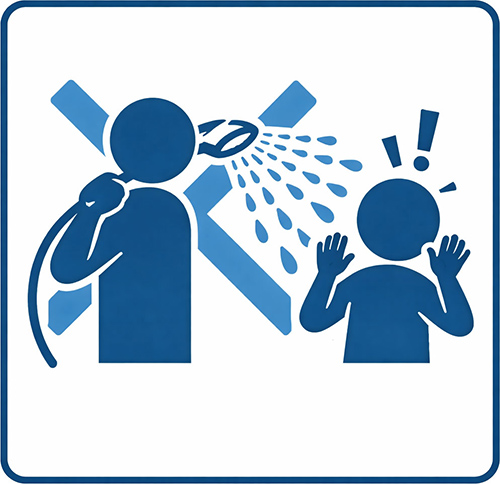
Stop behaving like you’re in your private shower at home. Many people—especially the younger generation—use the handheld shower head without a single thought for those around them.
Think about the physics for a second: If you hold the shower head at a distance and point it at your face or chest, any water that doesn’t hit your body keeps traveling right past you. It hits the person sitting behind you, or worse, sprays directly into the communal bath.
As an onsen employee, I am always in the bathing area fully dressed for work. When someone is careless with their shower spray, I get completely soaked. It’s a nightmare—try finishing your shift or driving home in wet underwear!
Some people seem to think, “Well, everyone else is already naked and wet, so what’s the big deal if a little spray hits them?” That mindset is shocking and incredibly rude. Whether someone is naked or clothed, getting hit by someone else’s stray shower water is never okay.
Believe it or not, stray shower water can lead to serious confrontations. In public baths, you’ll encounter all sorts of people—including some tough-looking older men who have zero patience for being splashed. It can turn into a real fight in the middle of the bathhouse.
It’s not just the men’s side, either. I recently spoke with a female colleague who mentioned a shocking story: an older woman was showering so carelessly that the water was spraying right between her legs and hitting the person behind her! It sounds unbelievable, but it happens when people forget they aren’t in their private bathroom at home.
The basic rule is simple: Be mindful of those around you. Keep the shower head close to your body and aim the water from above or slightly behind your head, pointing it directly down at yourself. This ensures the spray stays on you and doesn’t become someone else’s problem.
Hands Only! Never Use Your Feet on the Shower Lever
You might see some people—both younger guys and even older men—using their feet to push the shower or faucet levers. This is incredibly ill-mannered. Perhaps they are used to old-style toilets where you flush with your foot, but a shower lever is not “dirty” like a toilet handle.
Using your feet on a handle that others touch with their hands is a total lack of class.
If you want to leave the shower running indefinitely, stay home. In a shared Japanese onsen, wasting water is a serious taboo.
Using your feet to keep pushing the lever is not only lazy but dangerous for the equipment. Your legs are far more powerful than your arms, and it’s much harder to control the force of a kick or a stomp. These levers are precision-engineered for hand use—forcing them with your feet will eventually break the mechanism.
I get it, pressing the lever repeatedly can be a minor “hassle.” But that’s part of the shared experience. Use your hands, take only what you need, and treat the facility with the respect it deserves.
Understanding the “Timed” System
Most Japanese onsen use a “self-closing” faucet system. When you press the lever or button, a fixed amount of water comes out for a set time and then stops automatically. This is a smart, water-saving design that you won’t find in many other countries.
You don’t need to hold it down or kick it with force. Just a gentle push with your hand is all it takes. Treat the equipment with respect—it’s high-tech, not a punching bag for your feet!
The Secret to a Perfect Soak: Master the Rules, Enjoy the Magic
I have so much more to say that this post would be endless, so I’ll wrap up Part 1 for now.
Living here in Odawara, with world-famous hot spring spots like Hakone, Yugawara, and Atami right in my backyard, I truly want everyone to have the best possible experience. Even if you aren’t a regular onsen-goer, I hope this blog helps you understand the basic etiquette so you can enjoy the baths comfortably and respectfully.
Please Note:
The photos shown here are from my past travels or provided by my clients. They are not related to my current workplace or the specific facilities mentioned in this post.
Important Rule:
Photography and the use of smartphones are strictly prohibited in all bathing and dressing areas. Please respect everyone’s privacy.
この記事は、温泉の入り方・マナーを知らない人が多すぎる話・その1:かけ湯・シャワー編を日本人の方以外でも理解できるように編集・翻訳したものです。
コメント