

Master the Art of Onsen: Enjoy Japan’s Hot Springs to the Fullest
Master the Art of Onsen: Enjoy Japan’s Hot Springs to the Fullest2026.4.30
I am an Onsen Sommelier Master—a title awarded only to those who have achieved advanced certification within the Onsen Sommelier Association, a recognized authority on Japanese hot springs.
Whether it’s the bath at my workplace or a local sento (public bathhouse), I’m in the water almost every day before or after my shifts. As someone who truly lives and breathes onsen culture, I want to help you go beyond the standard tourist experience. I’ll share expert tips to help you level up from a casual visitor to a true onsen connoisseur.
Research and Seek the Best Way to Soak
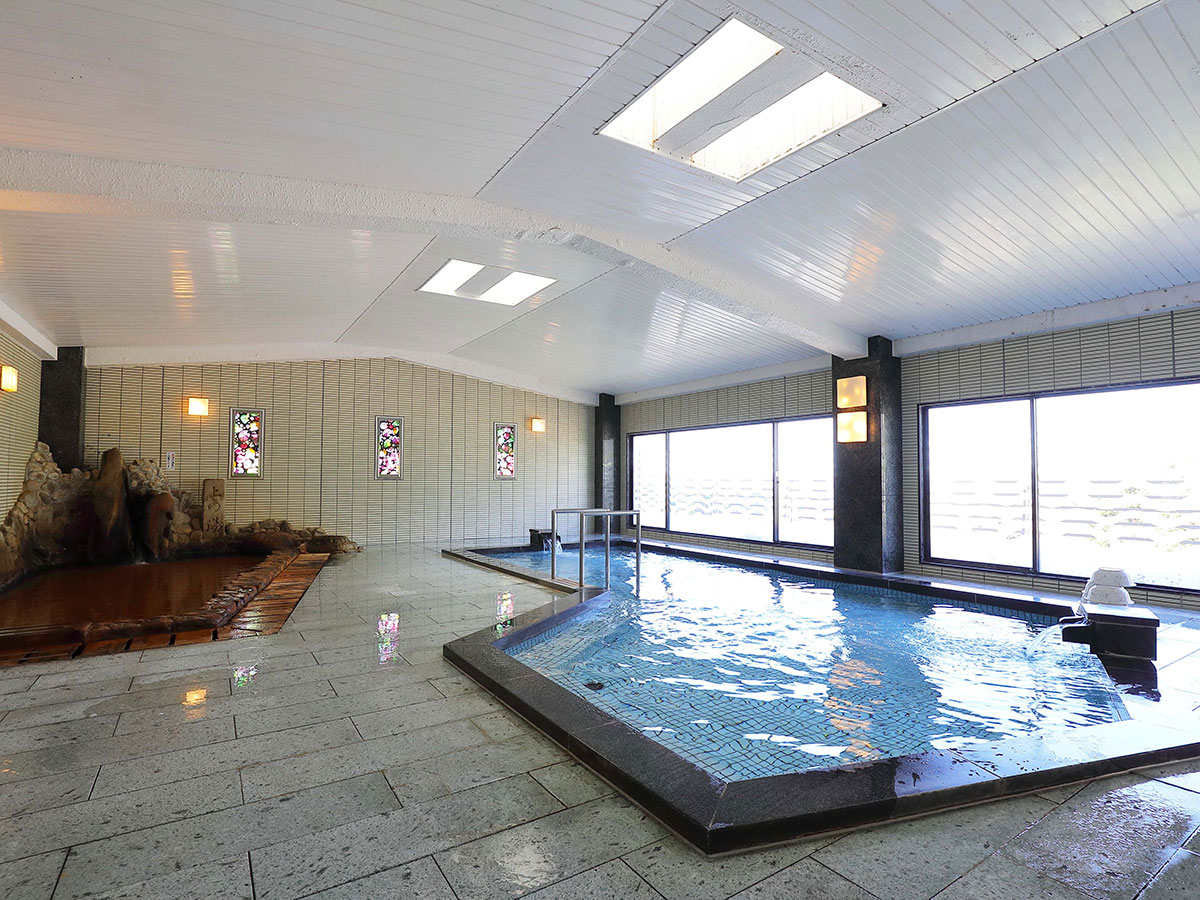
Some facilities provide their recommended bathing routines right on their official website, so it’s always a good idea to do a quick check before you visit.
Once you’re there, why not try asking the staff for their advice? You can ask about the unique characteristics of their baths or the best order to enjoy them. They might give you “pro tips” like, “Start with this bath,” “This one is perfect for a long soak,” or “Finish your session here for the best results.”
A quick tip for travelers: While major hotels often have English-speaking staff, smaller traditional inns (ryokan) or local bathhouses may not. If you find a staff member who speaks English, feel free to ask! If not, checking their website or signs beforehand is your best bet for a smooth experience.
Read the “Onsen Report” (Analysis Certificate)
You should also take a look at the onsen analysis report. At large public bathhouses (super sento), they may or may not display it in a prominent place even if they use natural hot spring water.
However, under the Japanese Hot Spring Act, every legitimate onsen facility is legally required to post an analysis report—updated within the last 10 years—where guests can easily see it. Facilities that take pride in their water quality may even post it on their official website.
The definition of an onsen in Japan is actually not that complicated. According to the Japanese Hot Spring Act, it simply needs to be naturally warm (25°C or higher) or contain a certain amount of specific mineral components as defined by law.
A high mineral count isn’t everything. It’s a great idea to check the analysis reports at various places and find the type of spring you personally enjoy.
Many facilities also disclose specific details, such as whether they add water (dilution), heat the water, use filtration and circulation systems, or use any additives. It is a good idea to check these features beforehand or ask the staff about them.
If a facility both dilutes and heats their water, it often suggests that the natural supply of spring water is insufficient. The logic is simple: they add water because there isn’t enough onsen water to fill the tubs, and then they have to heat it because either the original source is cool or they’ve added so much cold water that the temperature has dropped.
In other words, while it technically contains onsen components, it is effectively mostly tap or well water. In such cases, you might not expect strong therapeutic effects from the minerals.
However, that doesn’t change the fact that it is a spacious and pleasant bath. You should still enjoy it for what it is. If the local water source is clean, just think of it as a great bath made from high-quality heated water—that positive mindset is what matters.
Years ago, I stayed at a place on Mt. Rokko—a mountain in Kobe that is famous among Japanese people as a source of premium mineral water. The inn had a beautiful observation bath, but it wasn’t technically an “onsen.”
However, I thought to myself, “This is water from Mt. Rokko being heated—it’s a bath made from the same high-quality spring water as the famous bottled water, so this is still a great bath!” That’s really all there is to it. When it comes to enjoying an onsen, your mindset and how good it feels are far more important than overthinking the technical details.
These reports are usually written in Japanese and posted in the changing rooms. However, please remember that the use of smartphones or cameras is strictly prohibited in these areas.
Do not attempt to take photos of the analysis report or use a translation app on your phone while inside the changing room. Keeping these devices tucked away is a vital part of respecting everyone’s privacy.
Hydrate Before You Soak
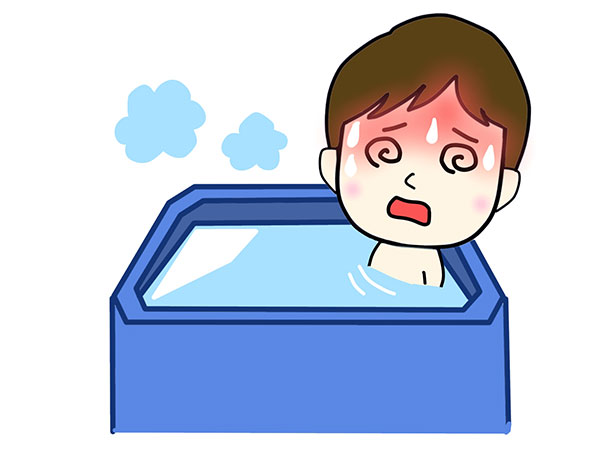
Before you get in the water, drink at least one glass of water. Bathing in an onsen consumes a surprising amount of energy, and to prevent dehydration, it is essential to hydrate before you soak.
On a side note, you may occasionally see people bringing their own plastic bottles or water bottles into the bathing area, but this is a direct violation of the rules.
In fact, most onsen and super sento facilities strictly prohibit bringing any outside food or drinks into the building itself, let alone the bath area. Taking these items into the actual baths is a serious breach of etiquette.
Whether you see bottles left on the edge of the tub or at the entrance of a sauna, this is considered very poor manners. Please do not do it.
However, this creates a dilemma for the facilities. While they want guests to stay hydrated for safety, it is practically impossible for staff to check every bag for plastic bottles, so they often end up turning a blind eye.
That said, most onsen and super sento are equipped with water fountains or vending machines.
The proper way to handle this is to buy your drink inside the facility and keep it in your locker—do not bring it into the bathing area. By doing this, you respect the facility’s rules while still taking care of your health.
Go to the Bathroom Before You Soak
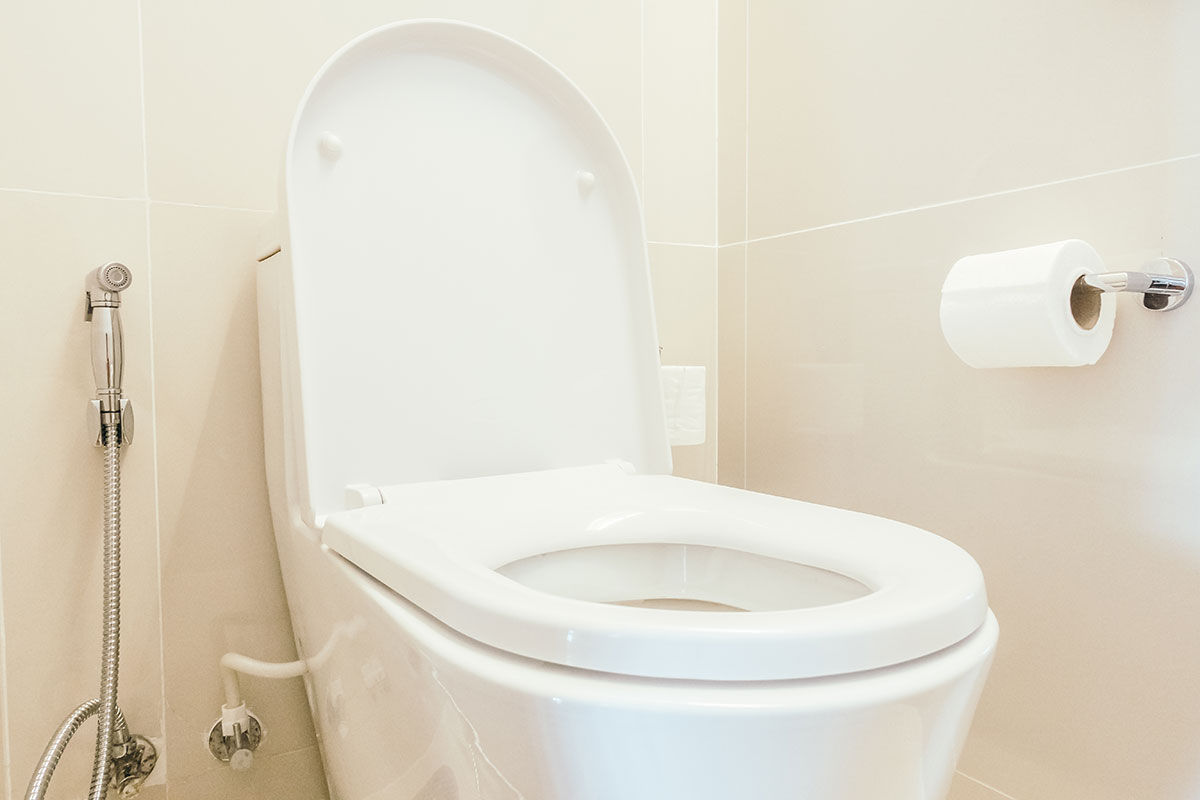
You would be surprised how many people go to the restroom in the changing area while their bodies are still dripping wet. This leaves the floor, the toilet seat, and even the toilet paper soaked. It is incredibly inconsiderate.
Remember, the restroom in the changing area is also used by people who have already dried off and dressed, or those who have just arrived. A wet floor is a major slipping hazard.
These facilities are used by everyone from young children to the elderly; while a younger person might be able to catch their balance after a slip, an older person may not be so lucky. Please be mindful of others.
And it should go without saying: the bath is not a toilet. You aren’t a child anymore—absolutely never relieve yourself in the water.
Japanese people place a very high value on cleanliness, and most find it extremely unpleasant to have their socks or feet get wet in the changing area. When you are in Japan, please be mindful of these local standards. Respecting the shared space by keeping it dry is a fundamental part of the experience.
Give Yourself a Thorough Rinse (Kake-yu)
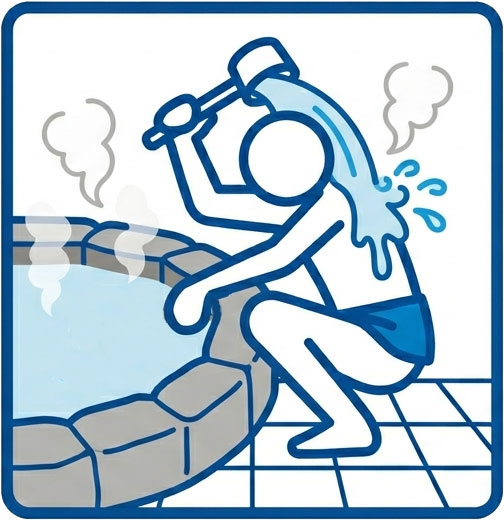
Do you practice kake-yu (pouring hot water over yourself) before entering the bath? Believe it or not, some people just skip it and hop right in.
I hope no one aiming to be an onsen expert would do that, but I often see younger Japanese people or visitors from abroad who aren’t used to the culture making this mistake.
When I’m working and spot someone about to dive in without rinsing, I try to speak up, but since I’m not always in the bath area, I can’t catch everyone.
For those already in the water, seeing someone enter without rinsing is incredibly off-putting. It feels unhygienic and disrespectful. Also, if you’ve just come from the restroom, simply splashing a little water isn’t enough; taking a proper shower to wash away any dirt is a vital part of onsen etiquette.
Above all, kake-yu serves a crucial role for your own health. Even at home, people can suffer from “heat shock” (a sudden change in blood pressure), and this is even more common at an onsen. It’s not unusual for the outdoor air to be below freezing while the water is over 40°C.
By thoroughly pouring hot water over yourself first, you can help prevent heat shock and keep yourself from getting lightheaded.
Additionally, some hot springs have a high mineral content that can be quite stimulating for the skin and body.
Kake-yu is a vital step to help your body acclimate to the water’s temperature and properties. It’s all about preparing your system for a safe and enjoyable soak.
Start with a Lukewarm Bath or a Half-Body Soak
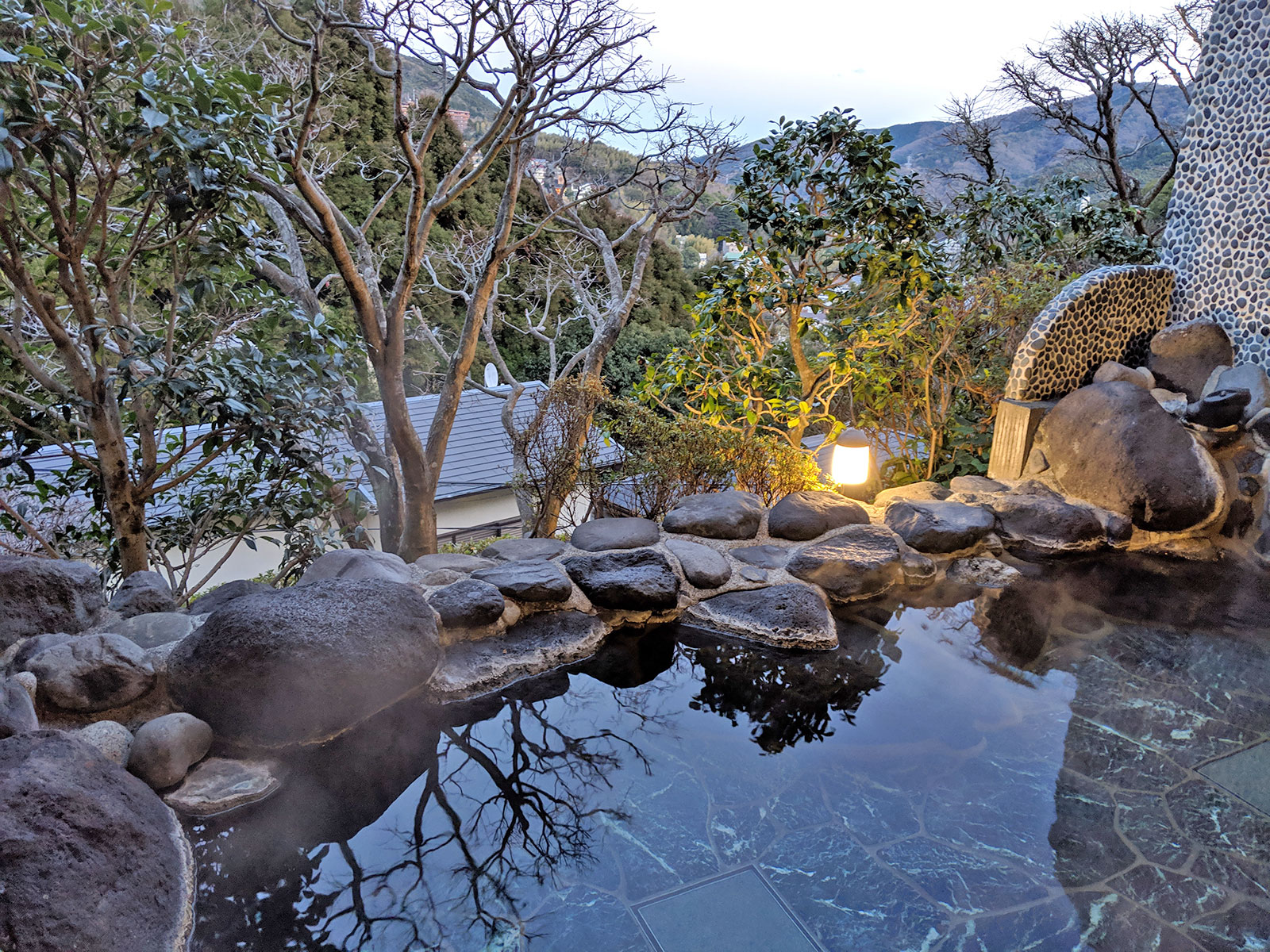
While some hot springs only have one temperature, many facilities with multiple tubs offer baths at different heat levels.
If you have the option, always start with a lukewarm bath to let your body adjust.
You can check the temperature yourself if there is a thermometer, or simply ask a staff member. If you aren’t sure, try scooping a little water with a bucket and pouring it over yourself first to gauge the heat.
If the facility only has very hot baths, avoid submerging yourself up to your shoulders all at once. Instead, start with a “half-body soak” (sitting in the water up to your waist) for a short period to gradually get used to the temperature.
Soaking in hot water feels great, but it puts a significant amount of stress on your body and your heart. Never push yourself too hard or try to endure the heat for longer than feels comfortable.
Japanese people tend to prefer their baths quite hot, often between 42°C and 43°C. If that feels too hot for you, please don’t force yourself to stay in. Listen to your body and step out whenever you need to.
Intermittent Bathing (Bunkatsu-yoku)
The Onsen Sommelier Association recommends a method called “Bunkatsu-yoku” (intermittent bathing).
The specific timing depends on the water temperature; for example, in lukewarm water, you might soak for 5 minutes, rest, soak for 8 minutes, rest, and then finish with a 3-minute soak.
In hotter water (around 42°C), you would soak for 3 minutes, rest, soak for 3 minutes, rest, and soak for 3 more minutes.
Personally, I find following strict routines a bit tedious.
My own style is to head to the bathing area, quickly rinse my head and body with the shower, do my kake-yu, and then start with a lukewarm bath if one is available.
After that, I wash my hair, get back in the bath, wash my body, get back in again, take a break, and then have one last soak.
In the end, this also counts as a form of bunkatsu-yoku.
I encourage you to experiment and find a bathing pattern that feels right and comfortable for you.
Put a Towel on Your Head
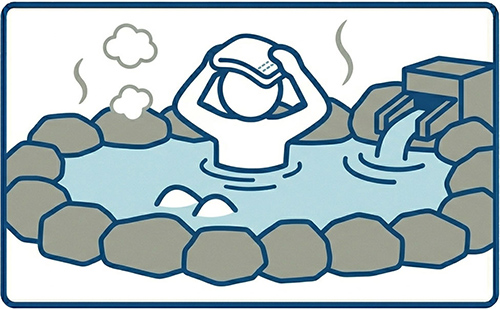
Beyond looking like a classic onsen guest or simply having nowhere else to put your towel, there are practical reasons for placing a towel on your head.
For those who are prone to getting lightheaded, or on hot days when the bath area is steaming, it is said that wetting your towel with cold water at the faucet and placing it on your head can help prevent dizziness and overheating.
Conversely, in situations like an outdoor bath in winter where there is a large temperature difference between the air and the water, your blood pressure can spike dangerously.
In this case, you should place a towel soaked in warm water (using kake-yu or the shower) on your head.
It is also said that performing kaburi-yu—where you place a towel over your head and pour warm water over it during the kake-yu process—helps prevent lightheadedness when you stand up.
Even if you’ve only been doing kake-yu because you thought it was just a rule of etiquette, try doing it with these health benefits in mind.
If the facility has both indoor and outdoor baths, one way to prevent feeling unwell is to warm up your body thoroughly in the indoor bath before heading outside to the open-air bath.
It would be a waste to visit a relaxing, healthy onsen only to end up feeling sick.
Take a Break Now and Then
Feeling the breeze, gazing at the sky, or reading a book—these are some of the most refined ways to enjoy your time at an onsen.
However, bringing a book into the bathing area is a definite “no.” On very rare occasions, people accidentally drop them into the water.
If the facility doesn’t have a strict time limit on your stay, the best way to do it is to get out of the bath for a while, have a meal, or enjoy your book in the designated relaxation area.
It seems like everyone who comes all the way to an onsen is still glued to their phone—in the relaxation area, in the changing room (which is not just bad manners, but can get you suspected of voyeurism), and even walking around the facility.
You can do that at home or in the city. For once, put your phone in your bag or pocket and just be. Feel the breeze, look at the sky, or zone out while listening to the sound of rain or birds.
To the younger generation, this might seem like “wasted” or boring time, but having “do-nothing time” is exactly what true luxury is.
People use the term “digital detox” these days, but instead of staring at a screen, why not take this time to look at the scenery and the sky with your own eyes?
Don’t Waste the Water
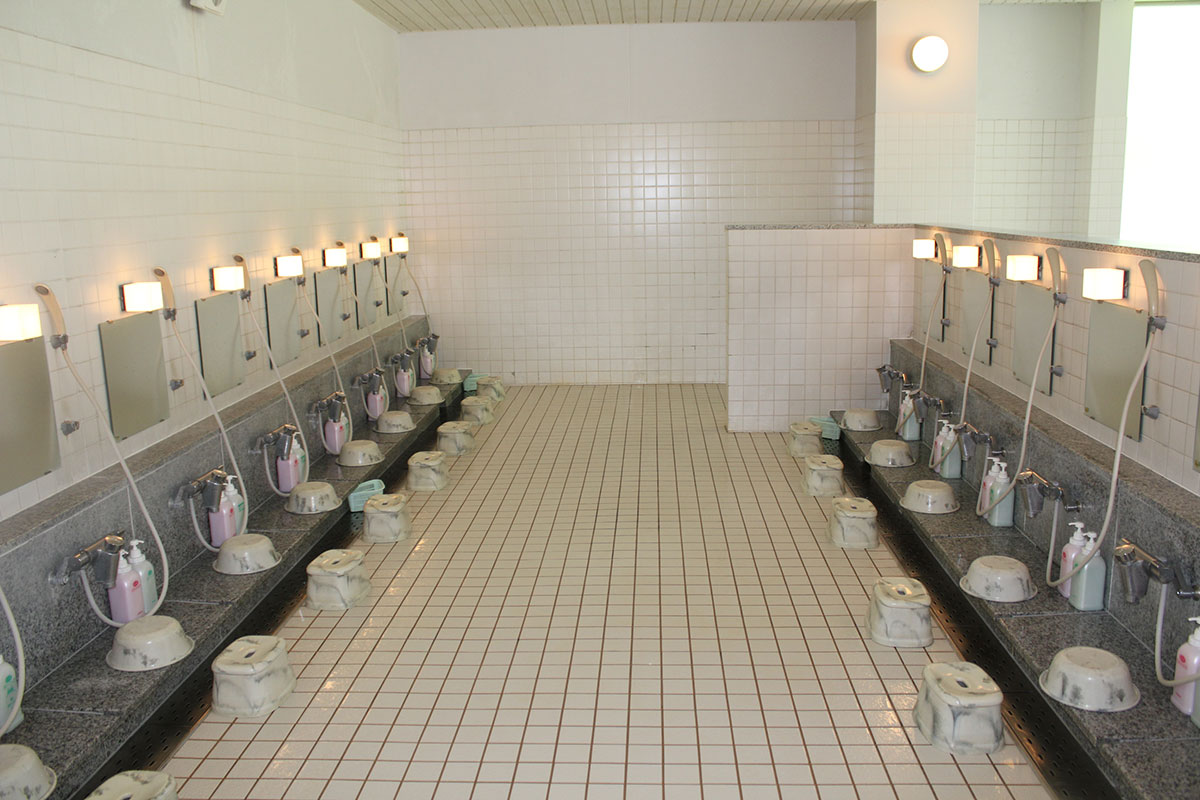
Leaving the shower running might be something you do at home, but at many onsen and super sento facilities, you will find “push-button” faucets that automatically shut off after a few seconds.
While this is partly for the facility to save on water costs, it is important to remember that water is a precious natural resource.
Please be mindful and avoid wasting it. For those unfamiliar with these fixtures, they are designed to provide just enough water for rinsing; simply press the lever or button again whenever you need more.
Using your foot to hold down the shower lever or repeatedly hammering the button is both pointless and unsightly.
It’s completely lacking in class. While this is certainly common among younger people, you see older men doing it too.
Some facilities will call you out on it, while others might look the other way, but either way, everyone around you—not just the staff, but the other guests as well—is thinking the same thing: that you have no common sense. It’s simply embarrassing behavior.
You can wash your hair and body perfectly fine even if the shower isn’t running constantly.
What do you think the washbowl is there for? Many people seem to think it’s just for rinsing their towel, but its real purpose is for scooping water to rinse your body.
If you think you can’t wash yourself without a continuous stream from a showerhead, you should honestly feel a bit embarrassed.
Just fill the washbowl with water and use only what you need to rinse off.
Do you feel the need to spend ages meticulously rinsing out every trace of shampoo or conditioner? Save that for your shower at home, not the onsen.
Rinse Your Stool and the Surrounding Area, and Put It Back
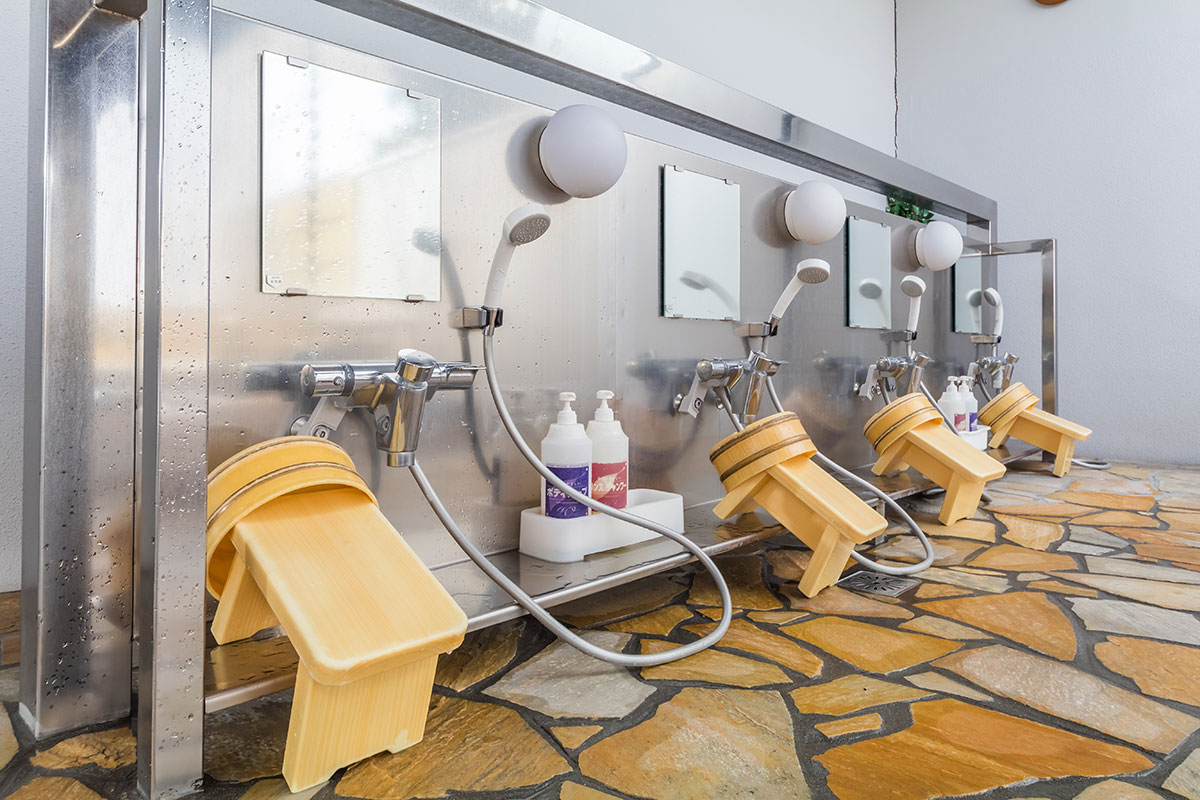
If you’ve splattered shampoo or soap suds around you, rinse them away.
If there is foam on your stool, the faucet, the showerhead, or the hose, wash it off. Finally, put your stool back where it belongs.
It is shocking how many people can’t manage these basic tasks.
Leaving the showerhead on the floor, leaving the washbowl full of water with a bar of soap sitting in it, or leaving behind trash from travel-sized shampoo packets—you have to wonder how someone was raised to think that’s okay.
It makes you question their upbringing.
Finish with Fresh Onsen Water (Agari-yu)
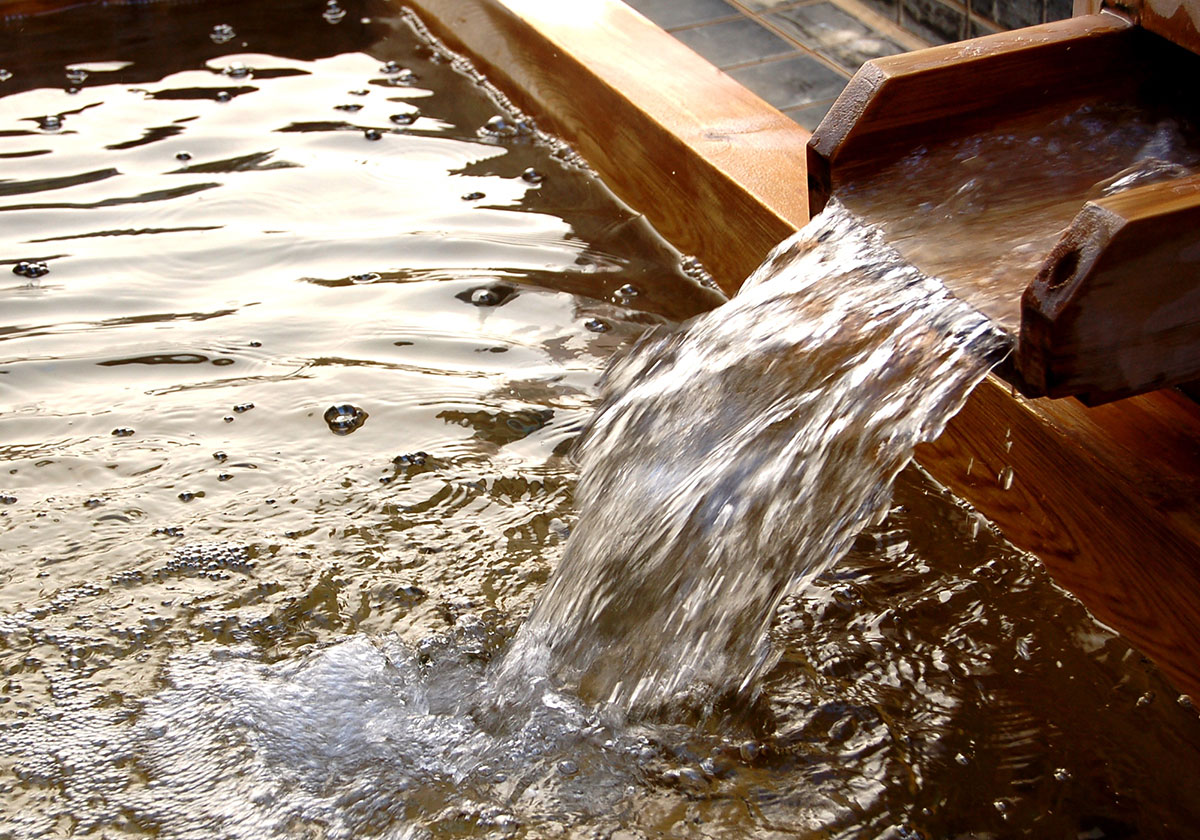
At hot springs where the water flows continuously (known as kake-nagashi), you will see a spout where fresh hot spring water enters the bath.
Before you leave, use this fresh water for your final rinse, known as agari-yu.
Simply collect the water from the spout in your washbowl and pour it over yourself.
However, in facilities that use a circulation and filtration system, the water coming from the spout isn’t necessarily “fresh” in the same way, so you don’t need to go out of your way to find a fresh source for your final rinse.
To Shower or Not to Shower Before Leaving?
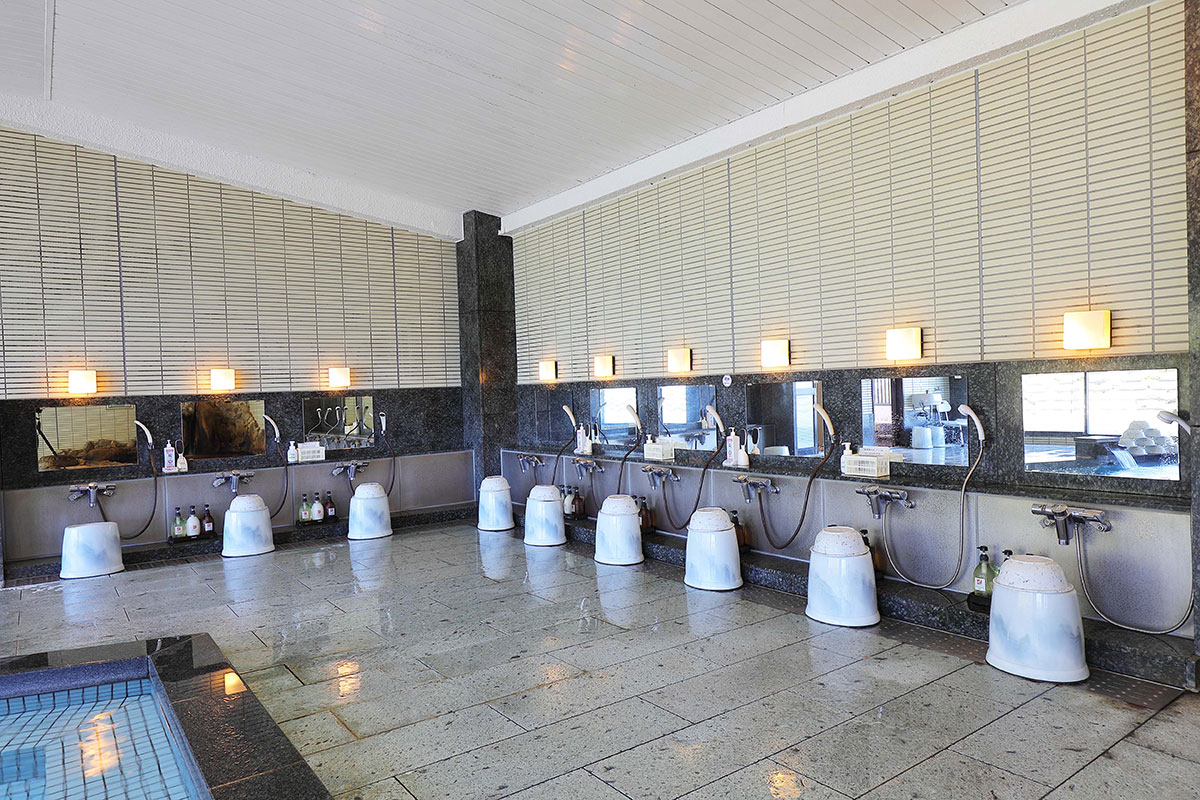
If you want to keep the beneficial minerals of the spring on your skin, it is better not to take a shower before leaving.
However, in the case of strong acidic springs or pungent sulfur springs, it may be better to rinse off thoroughly to avoid potential skin irritation or issues.
If you have experienced skin trouble from hot springs in the past or have sensitive skin, you should definitely rinse off.
Otherwise, taking a final shower is a bit of a waste, as it washes away all those precious onsen minerals.
If you are worried about dirt, just a very light rinse will do.
Dry Yourself Thoroughly Before Entering the Changing Room
When you do your agari-yu, you can also soak your towel in the fresh spring water. (To be clear: never dip your towel directly into the spout or the tub—that is the same as putting your towel in the bath, which is a major rule-break.
Instead, fill your washbowl with the fresh water and soak the towel in there.)
After wringing it out and wiping your body, you can keep the onsen minerals on your skin. Avoid scrubbing your skin too hard with the towel, as that will just rub the minerals off.
Instead, just pat yourself down enough to thoroughly remove the moisture.
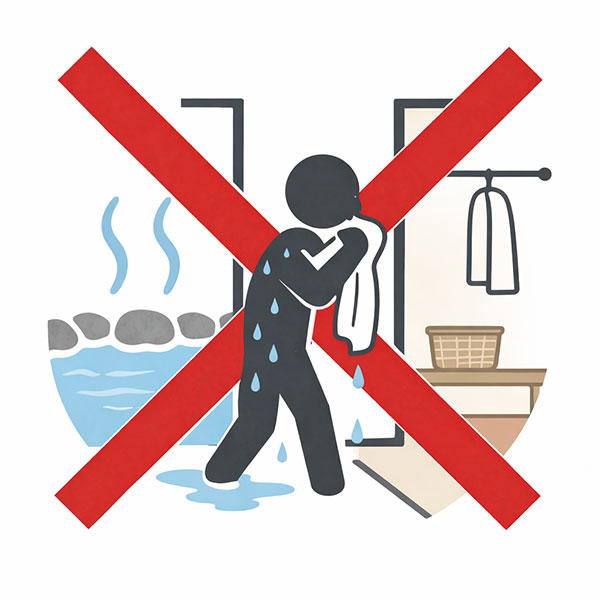
I emphasize this every time I write about onsen, but while most people have the decency to dry off before returning to the changing room, there are still plenty of ignorant, embarrassing people who walk in dripping wet.
If you call them out, some will apologize and head back to dry off, but you’ll also get the occasional older man who snaps back in a “reverse-rage.” Honestly, he’s just shouting his own ignorance and lack of manners for everyone to hear.
I wish people that inconsiderate wouldn’t act like they own the place—in fact, I’d prefer they didn’t come at all.
So, if you’re aiming to be a true onsen connoisseur, please don’t be that person. Drying off before you step onto the changing room floor is a universal rule for every communal bath in Japan.
Interestingly, one of our staff members once confessed, “I never taught my daughter the common sense of drying off before leaving the bath.” In fact, she didn’t even teach her to do it at home.
As a result, their bath mat was always soaking wet, and eventually, the floor of their dressing area actually rotted away and collapsed.
I was speechless when I heard it, and the other staff members were just as horrified, telling her, “You’re basically the ‘enemy’ of people like us who work at bathhouses!”
If leaving the floor wet can literally destroy a house, imagine the nuisance it causes in a public facility. It really shows why this rule is so important.
Double-Check Your Locker for Forgotten Items
It is incredibly common for people to leave things behind in or around their lockers. Occasionally, you’ll see someone using their phone’s flashlight to check for forgotten items, but as a rule, using a phone in the dressing area is prohibited.
While the staff might not call you out for a quick check, people around you will definitely wonder what you’re doing. A sudden flash of light could easily be mistaken for someone taking a photo (voyeurism).
Stick to a visual check with your own eyes. Also, keep in mind that people tend to leave things on top of the lockers even more often than inside them. Don’t place your belongings anywhere other than the locker you are actually using.
If you realize you’ve forgotten something after leaving the facility, give them a call first.
Most places will keep lost items at the front desk for a certain period.
While many people believe that Japan is so safe that forgotten items will always be returned, that isn’t necessarily guaranteed (though in many cases, they are).
Losing something in an unfamiliar place where English isn’t widely spoken—especially when you have a tight schedule to follow—can be a terrifying experience. It’s better to be extra careful than to rely on luck.
Hydrate, and the Japanese Onsen Staple: Coffee Milk
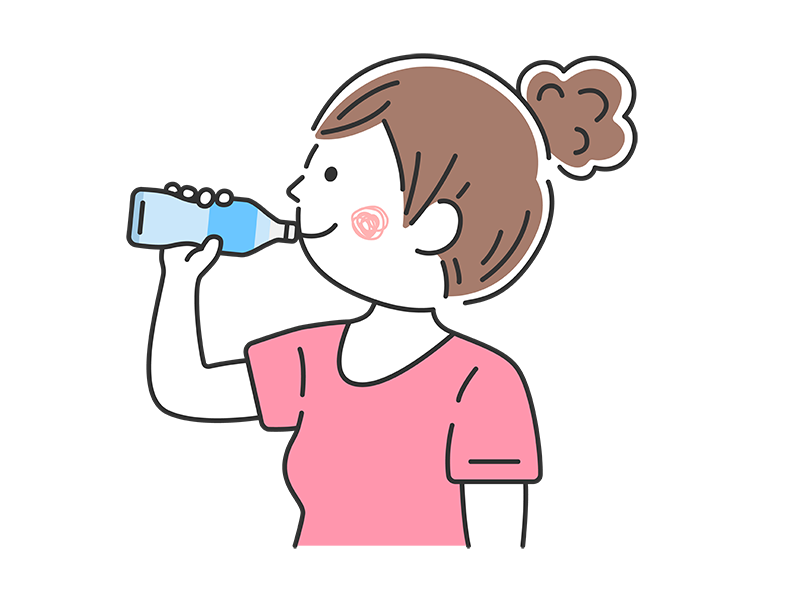
After getting out of the bath, make sure to drink at least a cup of water. And if there is a milk vending machine, you should definitely buy something. The classic choice is Coffee Milk. Sweet Fruit Milk is also a great option.
The other day, a foreign guest asked me what Japanese people drink at an onsen.
I tried to explain in my broken English that “Coffee Milk” is more popular than plain milk, but they just replied, “I already had coffee earlier, so I’m good.”
Man, they just don’t get it! (Though I guess it’s only natural since it was their first time.)
Put one hand on your hip and chug it down—that is the “Traditional Japanese Style.”
However, glass-bottled milk is actually more filling than it looks. If you try to force a chug, you might spill it or even choke, so be careful.
You might think, “No one actually does that,” but trust me, plenty of people do.
Also, it’s surprisingly common for people to just walk away after spilling their drink. If a staff member is nearby, they will clean it up immediately, so don’t hesitate to tell them that you’ve made a mess. Leaving it as-is is absolutely not okay.
One more thing: some people put their bottles back into the collection crate while they still have milk left inside. In the summer, this attracts insects, and frankly, it’s a huge nuisance for everyone. Always pour any leftover liquid down the sink before placing the bottle in the return crate.
Try “Insen” (Drinking the Thermal Waters)
If the facility provides “Insen” (drinkable hot spring water), you should definitely give it a try. You might think you can drink hot spring water anywhere, but that’s not the case. The Ministry of the Environment sets strict standards, and facilities must obtain permission from the prefecture, so it’s not something you can do just anywhere.
While drinking thermal waters is a major part of medical treatment and health practices in some parts of Europe, there actually aren’t many places in Japan where you can legally drink the spring water.
You might see some people drinking directly from the spout in the bathroom, but I wouldn’t recommend it. Especially if the facility doesn’t use a free-flowing (kake-nagashi) system—definitely don’t do it. (In fact, even if it is kake-nagashi, it’s still best to avoid doing so unless it’s specifically marked for drinking.)
Some facilities even allow you to take the hot spring water home, so it’s a good idea to bring an empty plastic bottle with you.
However, keep the water’s mineral content in mind. If your doctor has advised you to limit your mineral intake or if you have high blood pressure, drinking certain types of spring water might not be a good idea. Always check the specific properties of the spring first.
Make sure to only use water from the specifically designated drinking stations. Never fill your bottle with water directly from the bathtub to drink.
That water is for bathing, and drinking it is extremely unhygienic. Always use the proper “Insen” source provided by the facility.
Enjoy Cuisine Prepared with Onsen Water
While Beppu is quite famous among international visitors as one of Japan’s premier onsen destinations, its “Jigoku-mushi” (hell-steaming) — which uses natural volcanic steam to cook food — is particularly legendary.
But it’s not just about steam; did you know that many facilities across Japan also offer dishes like porridge, boiled tofu, and shabu-shabu made directly with the mineral-rich onsen water itself? Even the classic onsen tamago (slow-cooked egg) is a type of onsen cuisine.
While most onsen facilities have an attached restaurant or dining area, only a select few serve dishes specifically made with onsen water or steam. In these places, onsen water is used for everything from cooking rice and making miso soup or broth to boiling soba and udon noodles or serving as a base for hot pot dishes.
While sulfur springs can be a bit tricky due to their strong scent, you’ll find plenty of these unique options in areas with carbonated or alkaline springs.
By bathing in it, drinking it, and eating food prepared with it, you are experiencing the hot springs with your entire body. Once you’ve reached this level, you can truly call yourself an onsen connoisseur.
Ii Oyu Deshita (That was a wonderful bath)
When you are satisfied and ready to leave, try saying “Arigatou gozaimashita” (Thank you) and “Ii oyu deshita” (That was a wonderful bath) to the staff. It’s just like saying “Gochisousama deshita” or “That was delicious” when leaving a restaurant. Small gestures like these go a long way in showing your appreciation for the experience.
Follow the Manners and Let’s All Enjoy the Onsen Together
While I’ve gone into quite a bit of detail here, it all boils down to one simple thing: never forget that onsen and super sento are communal baths. As long as you follow the manners and ensure that everyone—not just yourself—can have a pleasant time, that’s all that matters.
Once you’ve got that down, feel free to relax and enjoy the experience in your own way.
My personal recommendation is to stop messing around with your smartphone. Look at the sky and the scenery, and listen to the sound of the wind or the rain.Having a moment where you do absolutely nothing is a true luxury.
If you really feel restless, try reading a book instead. After all, scrolling through your phone is the same whether you’re at home or at an onsen. Why not try spending your time in a way that can only be experienced right there?
Please Note:
The photos shown here are from my past travels or provided by my clients. They are not related to my current workplace or the specific facilities mentioned in this post.
Important Rule:
Photography and the use of smartphones are strictly prohibited in all bathing and dressing areas. Please respect everyone’s privacy.
この記事は、めざせ温泉上級者!もっと温泉を愉しもうを日本人の方以外でも理解できるように編集・翻訳したものです。
コメント